
Application · Ports & airports
Protecting the lifelines of logistics
Ports and airports consist of vast sealed areas where every weather-related disruption is costly. JUMBO BLOCK turns these areas into large-volume retention spaces – without restricting operations above.
Updated:
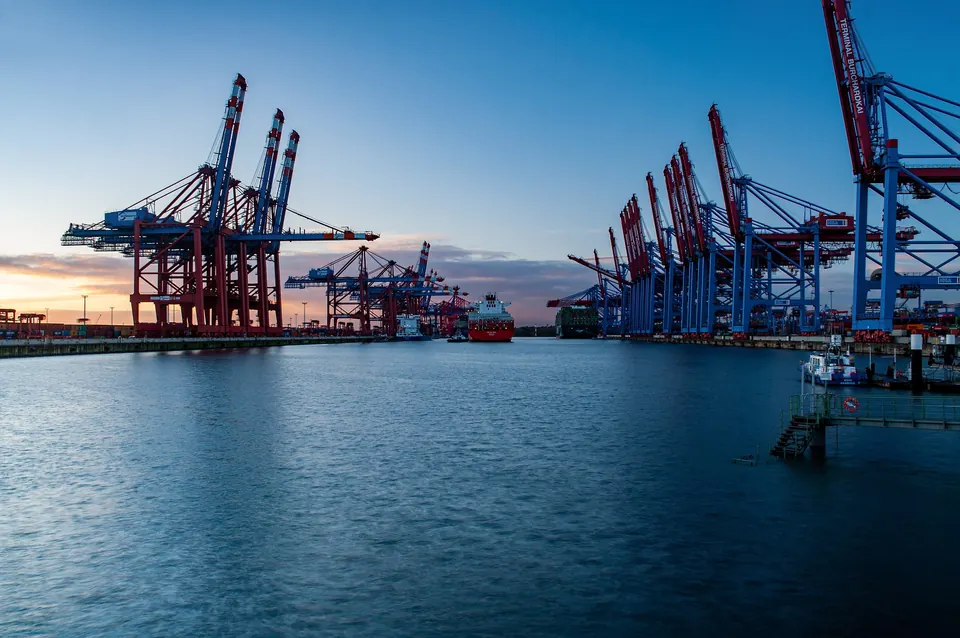
Ports
Robust infrastructure for port operations
Ports are hubs of global trade and must keep working even in extreme weather. JUMBO BLOCK retains rainwater beneath extensive port areas, prevents flooding and minimises disruption to logistics chains. The modular system adapts to load and site and fits into existing port infrastructure.
- High storage capacity for large sealed areas
- Flood protection for handling and storage areas
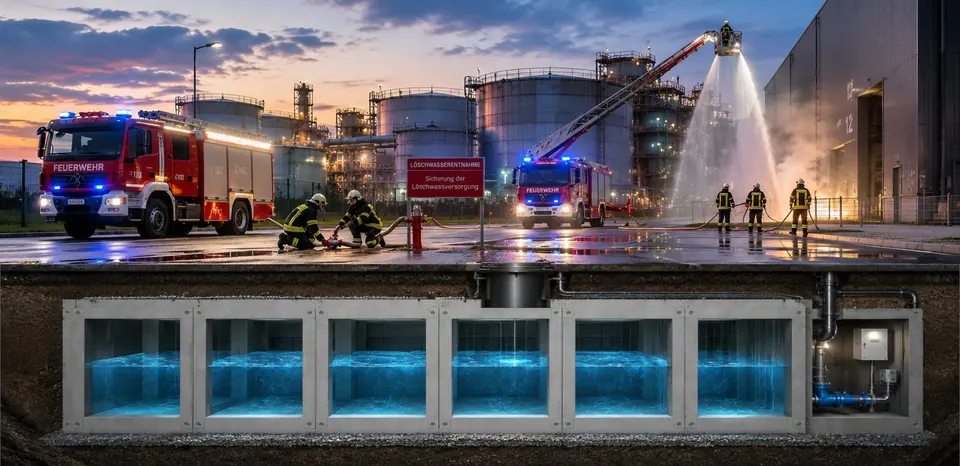
- Use rainwater as service and fire water
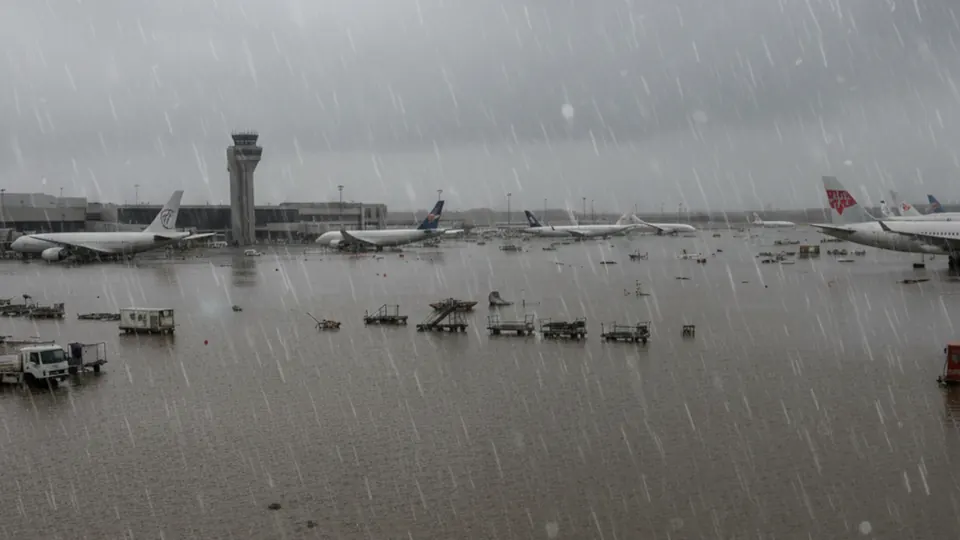
Airports
Retention beneath aprons and taxiways
Airports must reliably drain huge sealed areas. JUMBO BLOCK captures heavy rain where it falls, reduces standing water on operational areas and protects airport equipment from flooding. Throttled discharge relieves receiving waters and municipal networks.
Design for extreme loads: airport areas carry the loads of landing and manoeuvring aircraft. As with cast-in-place structures, structural design is carried out per project to the applicable Eurocodes. In the composite of modules rotated by 90°, neighbouring columns stand side by side and together form a 50 cm × 50 cm cross-section. Subject to individual verification, the installation can lie beneath taxiways, aprons and logistics areas.
Building during operations
Fast, predictable, sustainable
Because the modules are delivered prefabricated, construction time is short and precisely predictable – disruption to operations stays minimal. The stored rainwater also supports environmental and sustainability goals: as service water, for irrigating green areas or as a decentralised underground fire-water store.
Discuss your project
We support you from initial sizing through planning and structural design to operation with monitoring.
FAQ
Frequently asked questions
Can JUMBO BLOCK lie beneath taxiways and aprons?
Yes, subject to individual structural verification. Design is carried out per project to Eurocode for the governing aircraft and vehicle loads.
How is construction carried out during airport or port operations?
Modules arrive as precast elements; construction phases can be kept small and precisely scheduled so that operations are only minimally affected.
What happens to the stored water?
It is discharged at a throttled rate or used as service water, for irrigation and as a fire-water reserve.
Read on
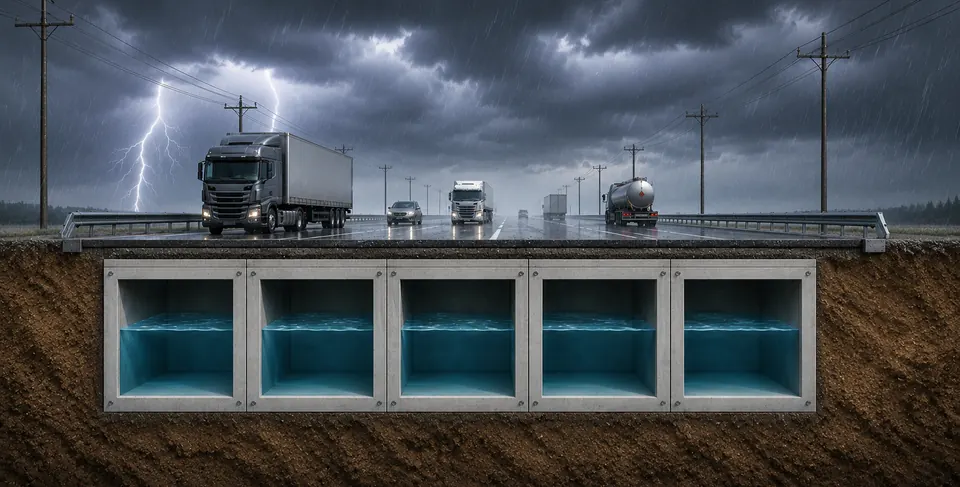
Roads & transport infrastructure
Retention in road and transport construction.
Fire-water storage & retention
Underground fire-water storage.
Industry & commerce
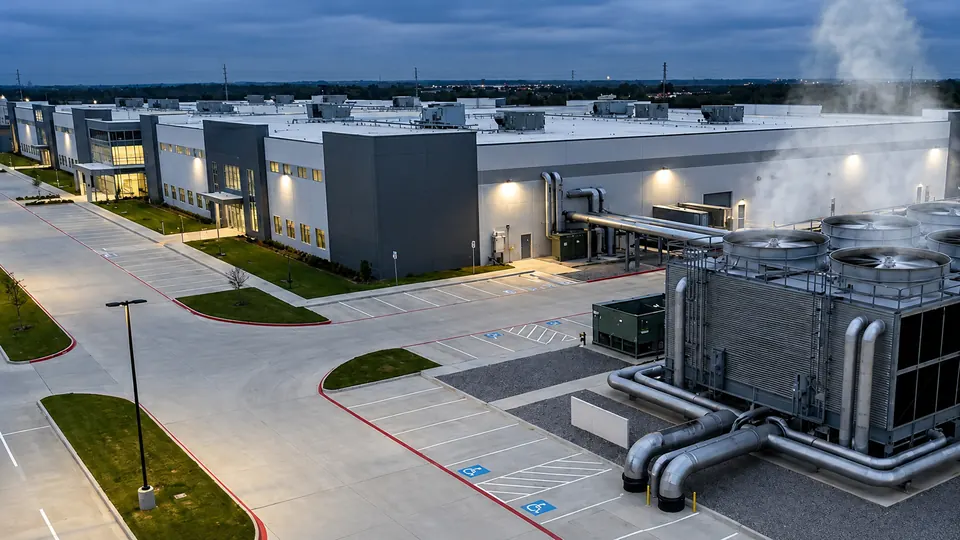
Protect logistics and industrial sites.