
Climate adaptation
True Sponge City 2.0
Sealed cities have lost the ability to store water and balance heat. JUMBO BLOCK restores both beneath the surface – without using a single additional square metre.
Updated:
The core problem
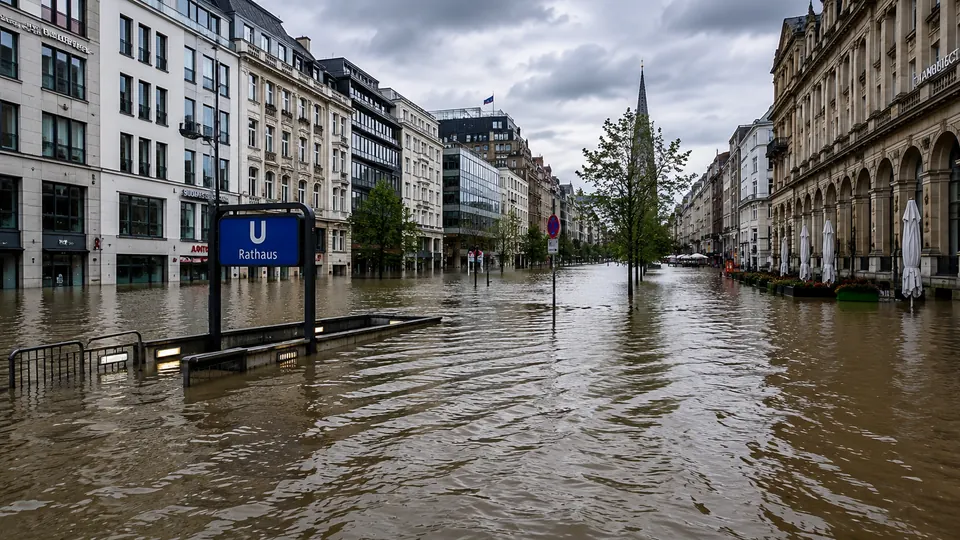
More heavy rain meets sealed cities
Warmer air holds more water vapour; heavy rain becomes more frequent and more intense. The floods in Germany's Ahr valley and in the Valencia region showed what happens when large volumes of water hit densely built-up areas.
- 01
Sealed surfaces
Rain can hardly infiltrate, runs off within minutes and collects on streets, squares and car parks.
- 02
The force of water
Large volumes overload sewers, endanger people, damage infrastructure and cause major losses.
- 03
Urban heat island
Asphalt and concrete store solar energy; cities are often several degrees warmer than their surroundings.
The solution
Room for water – without new land
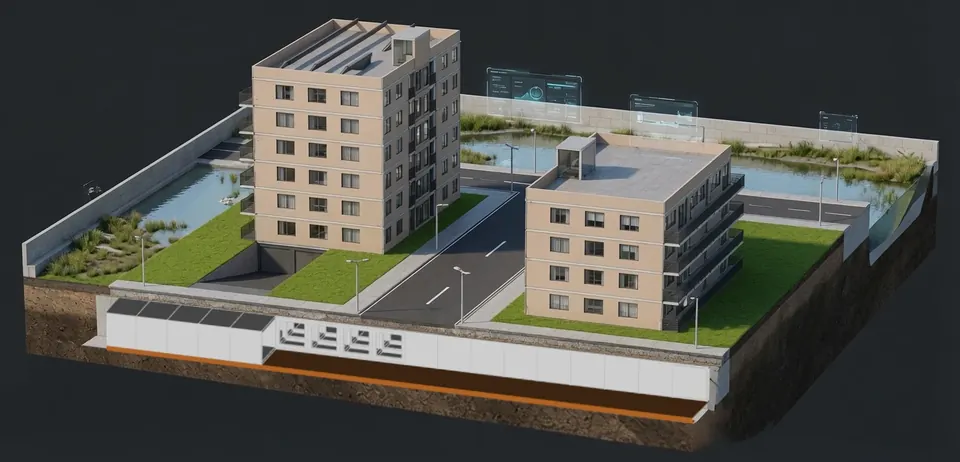
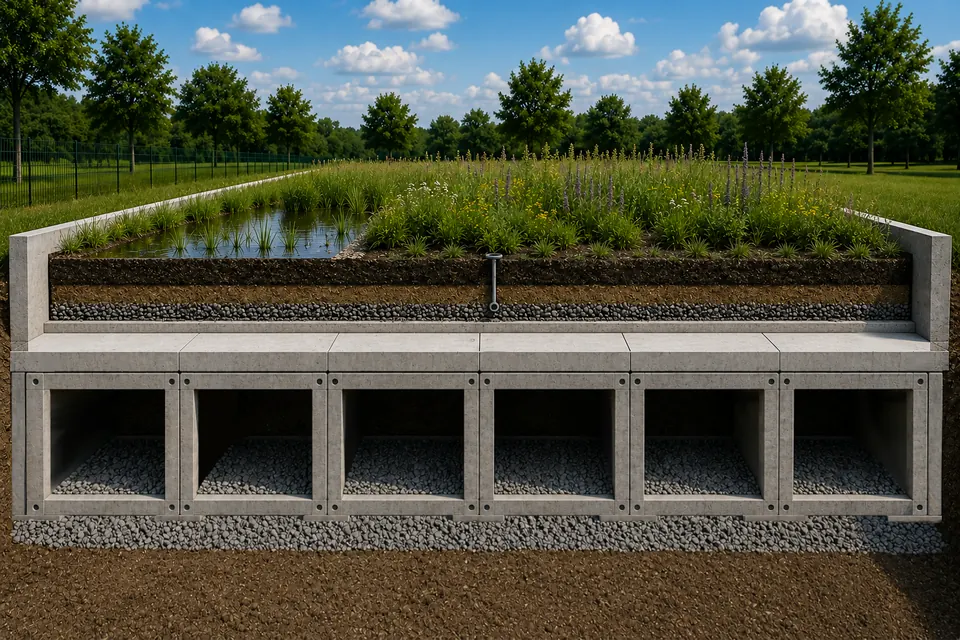
Rainwater is stored temporarily where it occurs: beneath streets, car parks and other sealed areas. This relieves the surface and the sewer and keeps water for dry and hot periods.
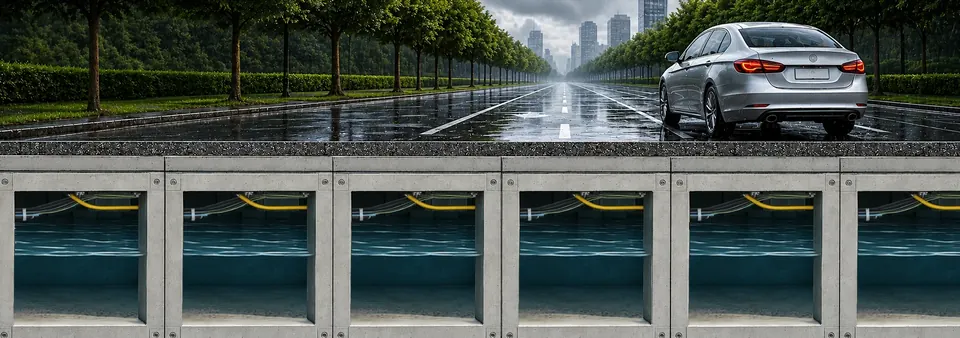
- Reinforced-concrete modules with a 2.5 m edge length and 13.9 m³ usable volume
- Practically unlimited scalability and extensibility
- Can be dismantled and relocated
- Walk-in and accessible to machinery
- Traffic loads to EN 1991-2, service life 80–120 years
- Optional real-time monitoring for KRITIS operators
Multi-level system
Complement, not replace
An effective sponge city works on several levels. JUMBO BLOCK takes care of the underground.
Surface
Unsealing, swales, green roofs, planted areas
Underground
Large-volume, decentralised retention and infiltration with JUMBO BLOCK
Surrounding land
Renaturalised watercourses and regional retention basins
Digital
Monitoring and early warning via the JUMBO BLOCK Dashboard
The walk-in cross-sections also provide protected space for fresh water, wastewater, power, data and communication lines. In the event of damage they can be inspected and repaired without digging up the road.
The air conditioning lies beneath the street
Passive cooling effect
At an air temperature of 38 °C, asphalt and concrete surfaces reach 55–70 °C. The heat is stored during the day and released only slowly at night – cities hardly cool down.
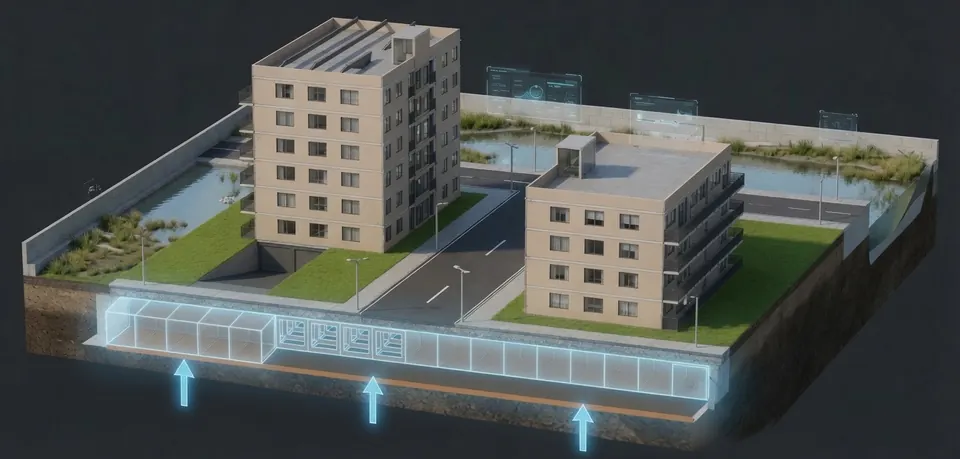
JUMBO BLOCK modules lie in a single layer beneath roads, cycle paths and footpaths. Think of the system as a large underground water store with natural air circulation:
- After rain: stored water draws heat from its surroundings through evaporation – particularly intensive cooling.
- In dry periods: concrete mass, air exchange and heat conduction into the ground continue to absorb heat.
The result: a passive heat buffer – energy-free, weather-proof and low-maintenance.
Start your preliminary design
With Hydro, Plan, Design and Budget from the JUMBO BLOCK Engineering Suite you can produce a preliminary design freely and without installation. Structural analysis and heat balance are calculated on request.
FAQ
Frequently asked questions
What is a sponge city?
A sponge city absorbs rainwater where it falls, stores it and releases it with a delay or uses it – instead of draining it away as quickly as possible. This protects against flooding and helps during heat and drought.
What is different about Sponge City 2.0 with JUMBO BLOCK?
JUMBO BLOCK adds large-volume, heavy-duty storage beneath streets and squares to the familiar surface measures. This creates retention space without using additional land – combined with digital monitoring.
Can JUMBO BLOCK cool cities?
Yes, passively and without energy input. Stored water draws heat from its surroundings as it evaporates; even when dry, the concrete mass, air exchange and heat conduction into the ground buffer temperature peaks.
Read on
Municipalities
Heavy-rain preparedness and climate resilience for municipalities.
Environment & sustainability
Durable materials, circularity and protection of soil and water.
System & principle
How the system works in detail.