
Dashboard & IoT
Installation data in real time – verifiably documented
The JUMBO BLOCK Dashboard shows what is happening in the installation and records what has happened. Measurements become a reliable basis for operations, reports and the review of events.
Updated:
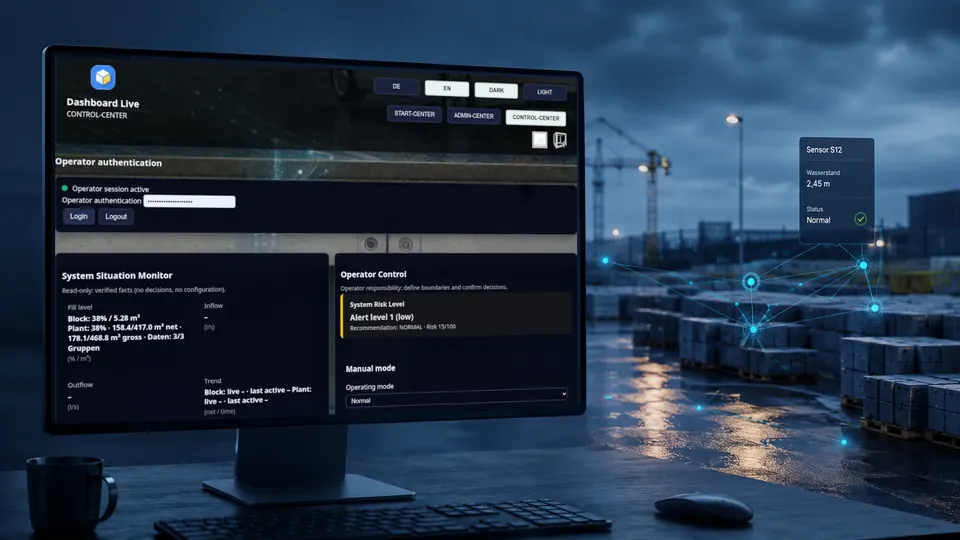
Status at a glance, at all times
- current fill levels of the storage areas
- development of rainfall and weather
- status of individual sensors
- overall system status
- alarms and operational events
This data provides a reliable basis for operational decisions – from controlled emptying before forecast heavy rain to withdrawing water in dry periods.
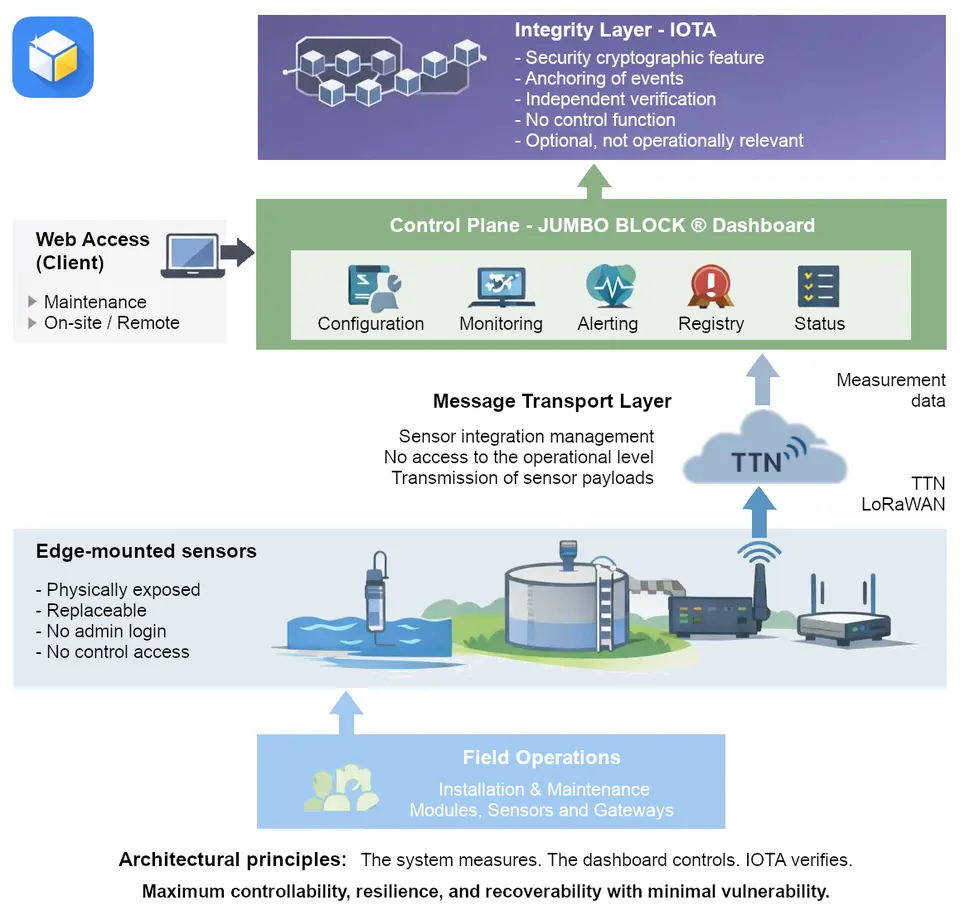
Four functional areas
Monitor, manage, verify, decide
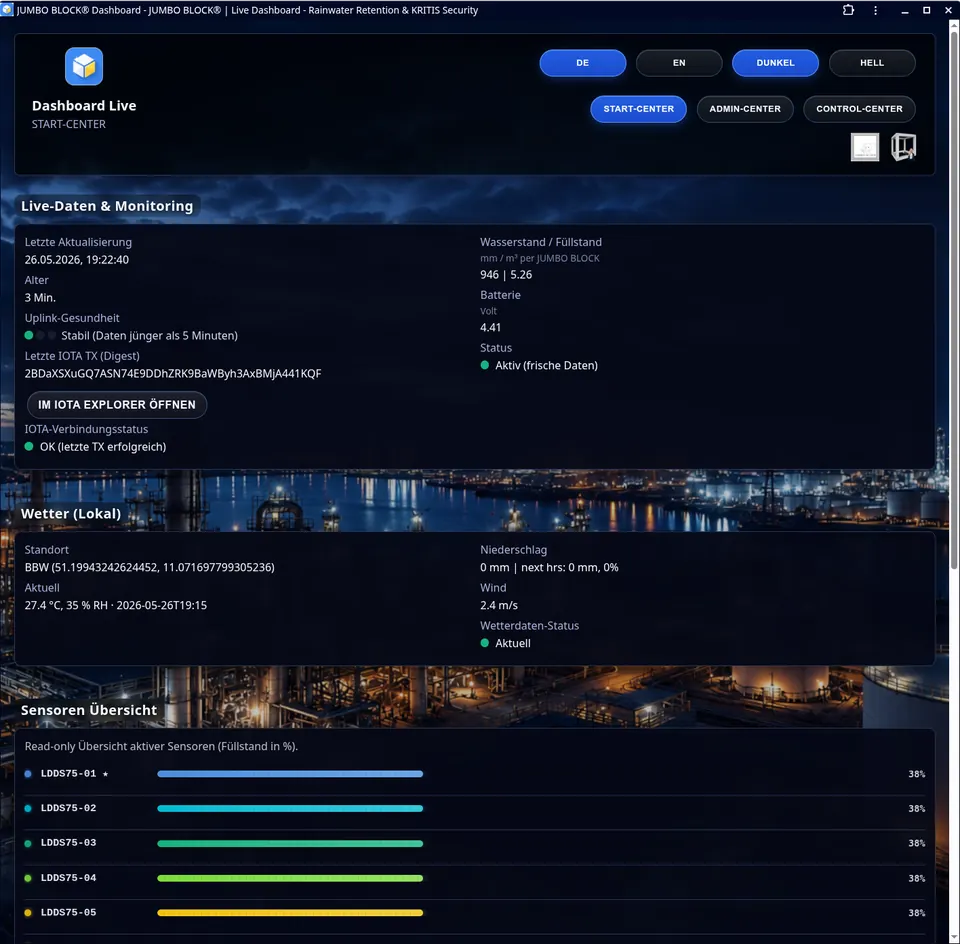
START-CENTER
Monitor infrastructure
Overview of sensor data, fill levels and environmental conditions. The same live data is available via the public API.
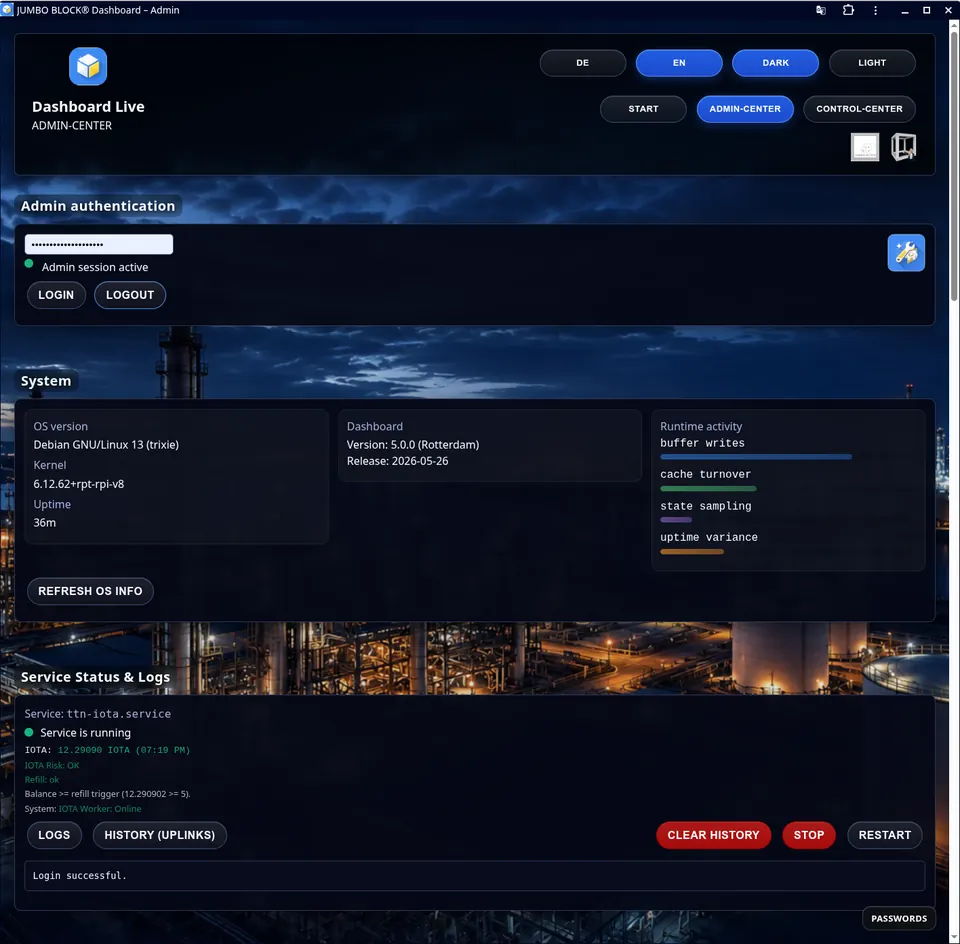
ADMIN-CENTER
Manage the system
Configure sensors, maintain settings and ensure stable operation.
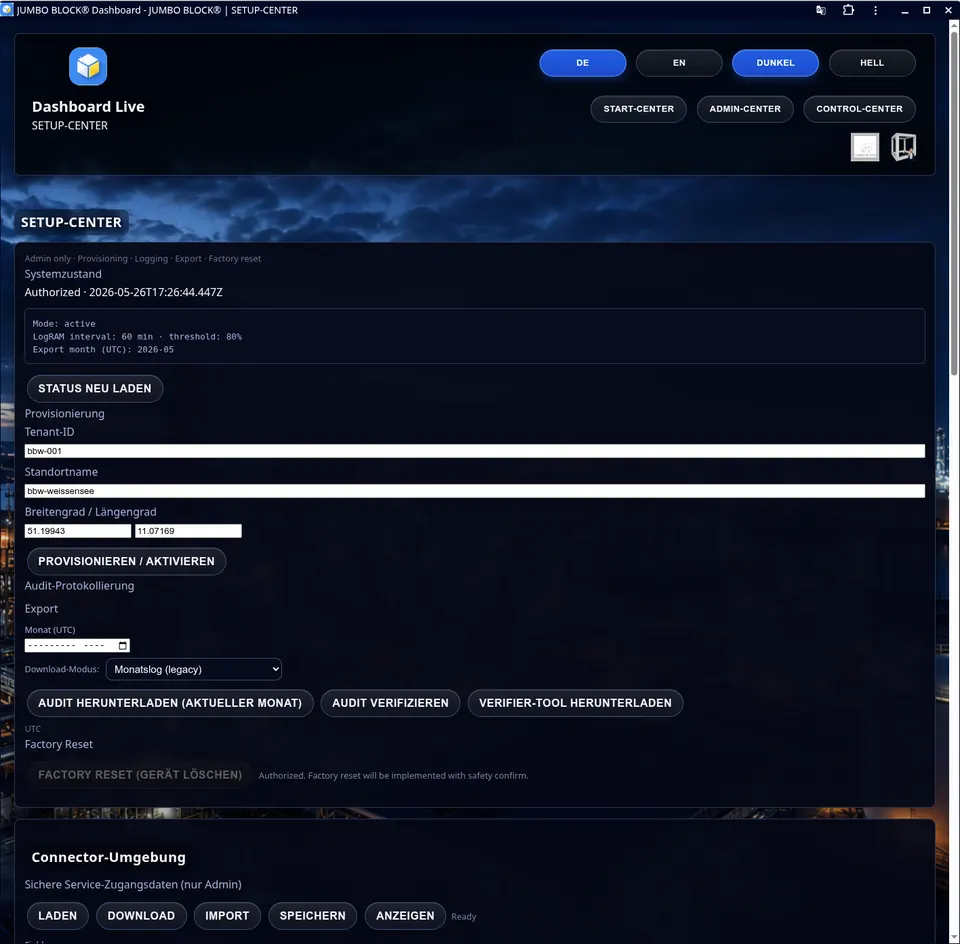
SETUP-CENTER
Verify records
Verification and diagnostic tools, audit export and a direct link to the current anchor in the IOTA explorer.
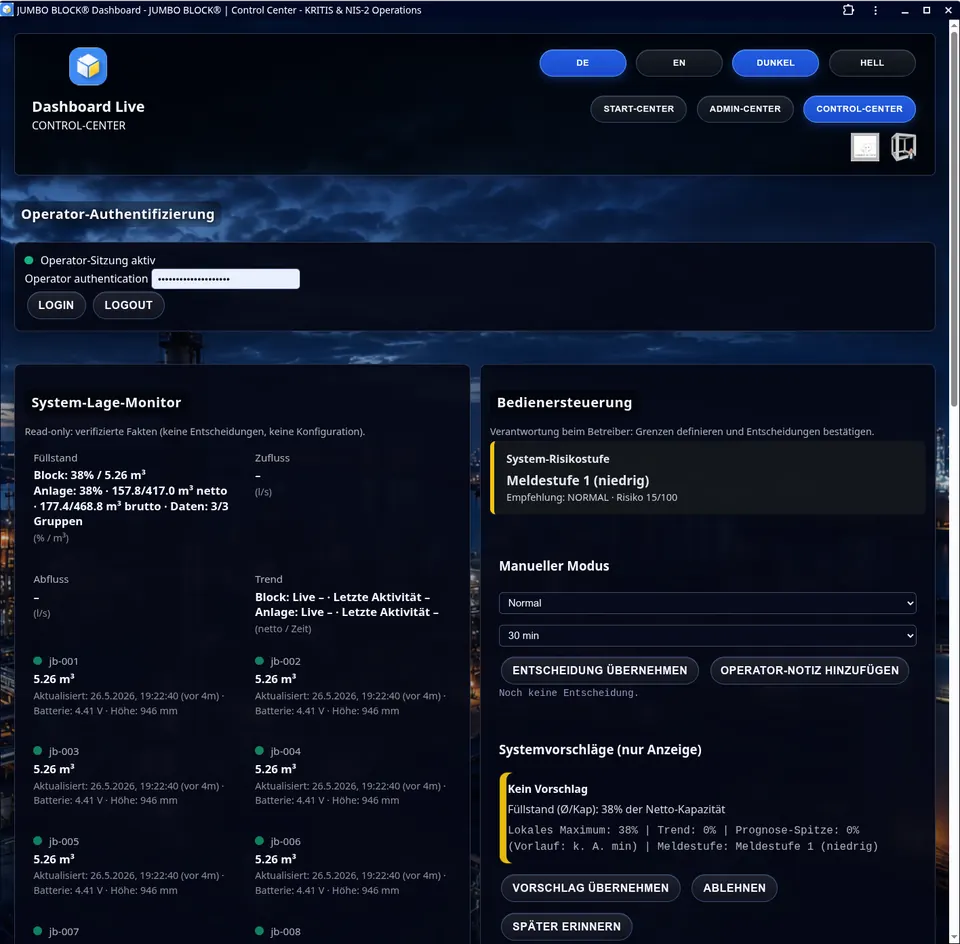
CONTROL-CENTER
Understand the situation
Situation picture for exceptional events; situation confirmation under the four-eyes principle, logged in the audit trail.
Traceability
What really happened?
The system regularly creates digital snapshots with states, measurements, weather data, timestamps and events. Each record is linked to the previous one. This makes it possible to reconstruct later when something changed, how an event developed and which parts of the installation were affected.
Additional assurance through IOTA
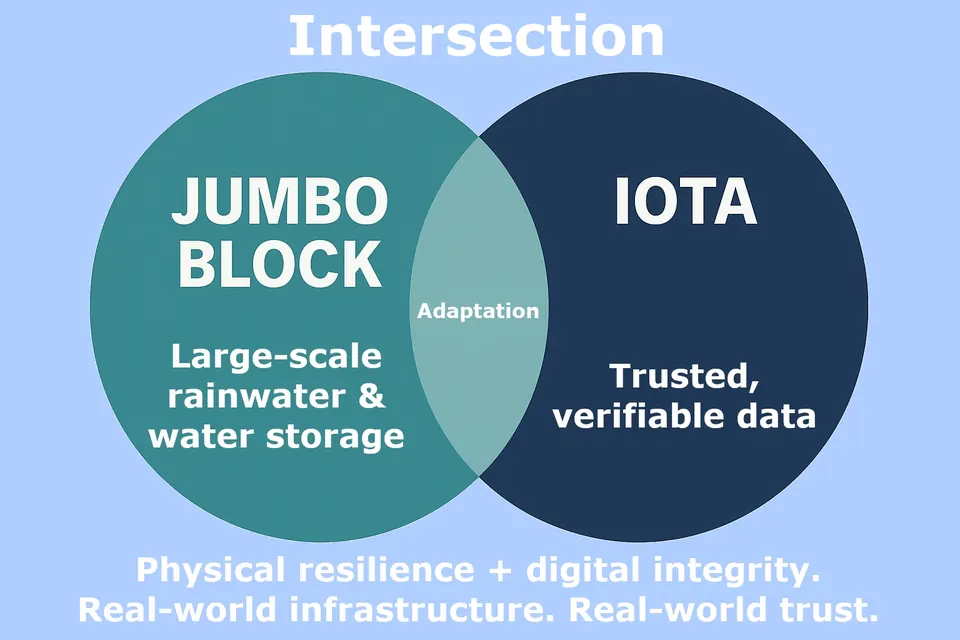
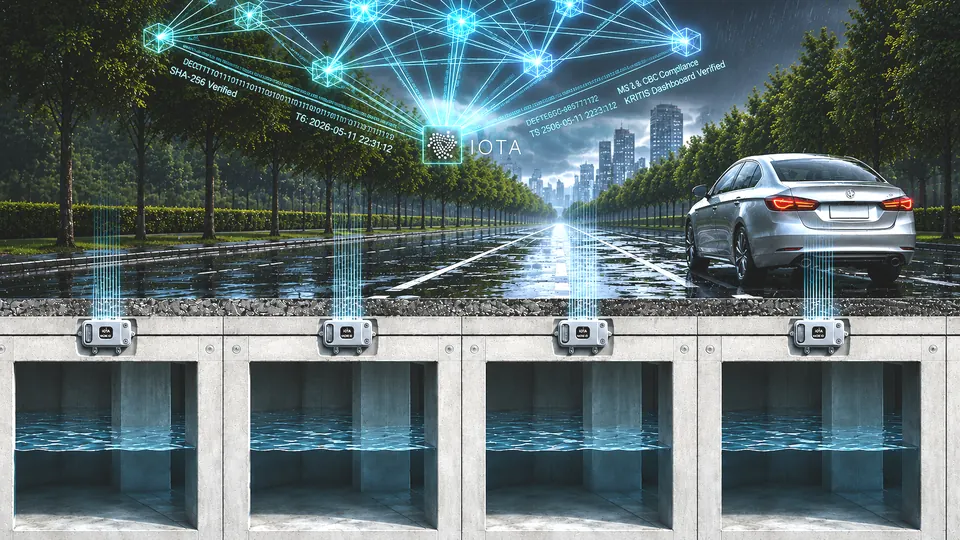
Integrity proofs are cryptographically anchored on the IOTA mainnet. Because this check does not depend on any central authority, anyone can independently verify that records are unchanged. A verification tool confirms the integrity of downloaded audit files even without internet.
This supports the technical analysis of heavy-rain events, incident documentation, insurance and damage assessments, and evidence for supervisory authorities under NIS-2, the KRITIS umbrella act and the CRA.
Internet of Things
Sensors and data transmission
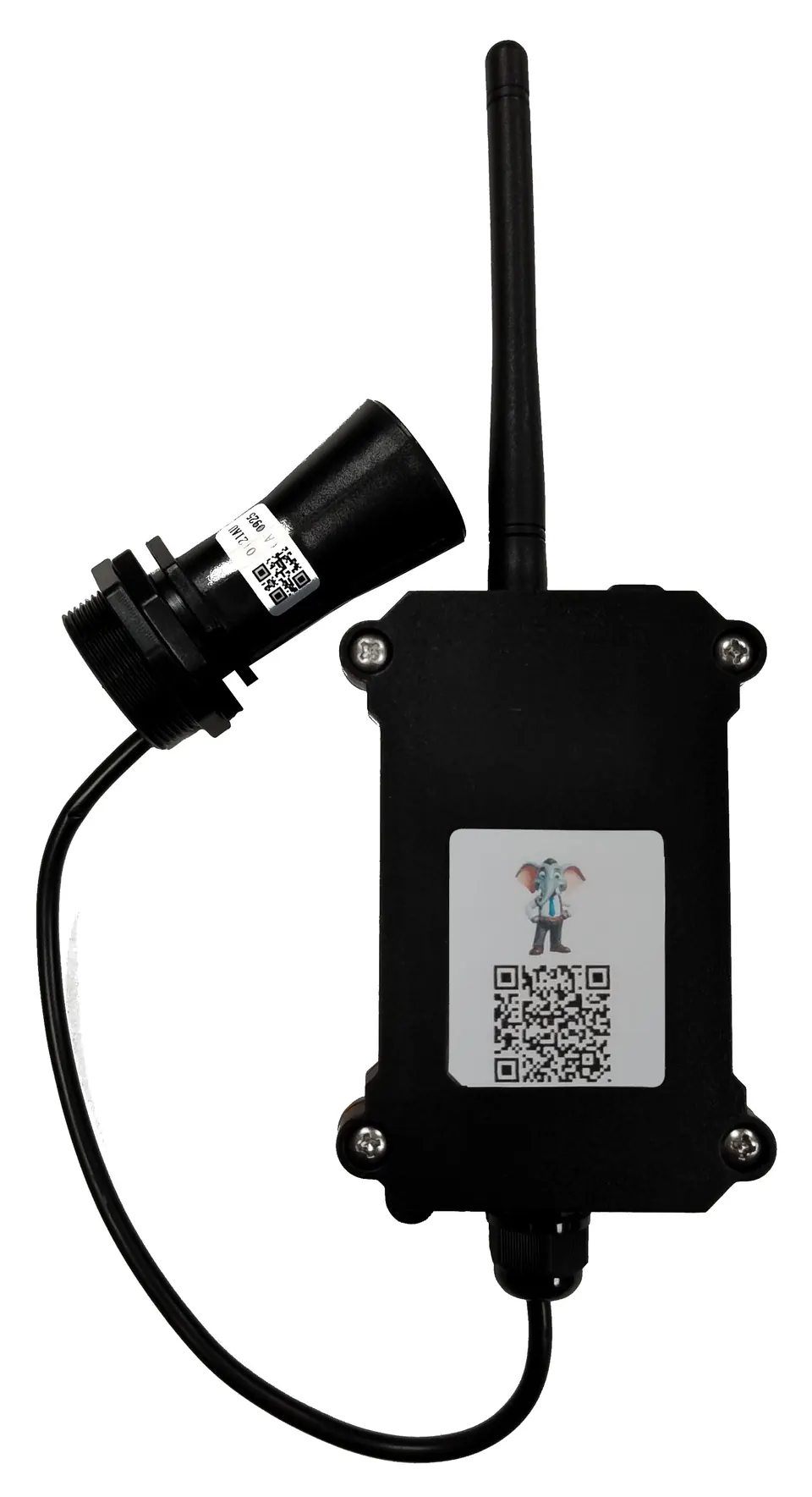
LoRaWAN®
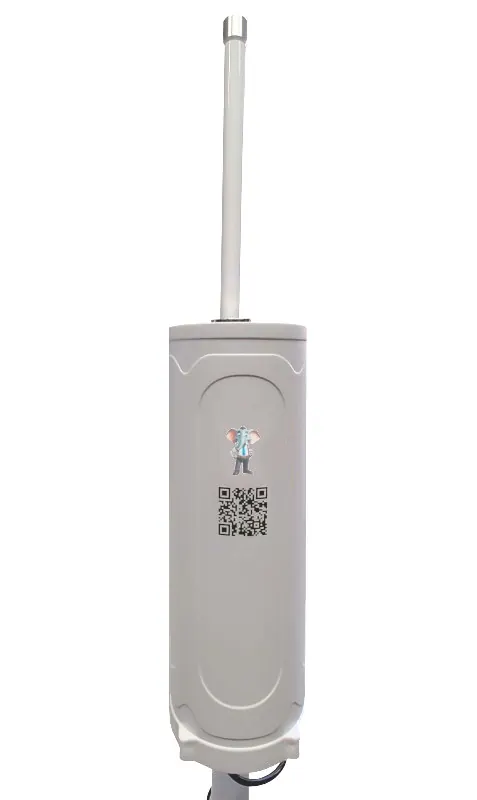
Energy-efficient, long-range transmission – reliable even from underground or remote installations.
Long battery life
Sensor battery life typically five to ten years; interfaces can be customised.
Uniquely identifiable
Installations and components are uniquely assigned; data is available to authorised users at any time.
Water accounting
Stored and reused water can be measured precisely and billed transparently.
FAQ
Frequently asked questions
What is the JUMBO BLOCK Dashboard?
A self-hosted monitoring platform for stormwater and storage installations. It shows fill levels, sensor status and weather data in real time, records events in a chained audit trail and anchors integrity proofs on the IOTA mainnet. Live since November 2025 at jumboblock.net.
How is the data protected against tampering?
Each record is cryptographically linked to the previous one. In addition, integrity proofs are anchored in a decentralised network (IOTA mainnet). A verification tool checks downloaded audit files completely offline.
How does sensor data reach the dashboard?
Via LoRaWAN®: energy-efficient, long-range radio transmission, even from underground installations. Sensors typically run for five to ten years on one battery.
Can authorities access the data directly?
Yes. A public, authentication-free interface (API) provides the current status of the installation – e.g. for control centres, GIS maps or SCADA systems – without the operator having to transmit data.
Read on
KRITIS · NIS-2 · CRA
Duties under the KRITIS umbrella act, NIS-2 and CRA.

Engineering Suite
Planning, structural design and crisis tools.
System & principle
The physical system behind it.