
Blog
When Infrastructure Speaks
Why the JUMBO BLOCK® system makes events traceable
Heavy-rain events and flooding pose ever greater challenges for cities and municipalities. Alongside structural protection measures, a second question is becoming increasingly important:
How can the condition of critical infrastructure be documented traceably during and after an event?
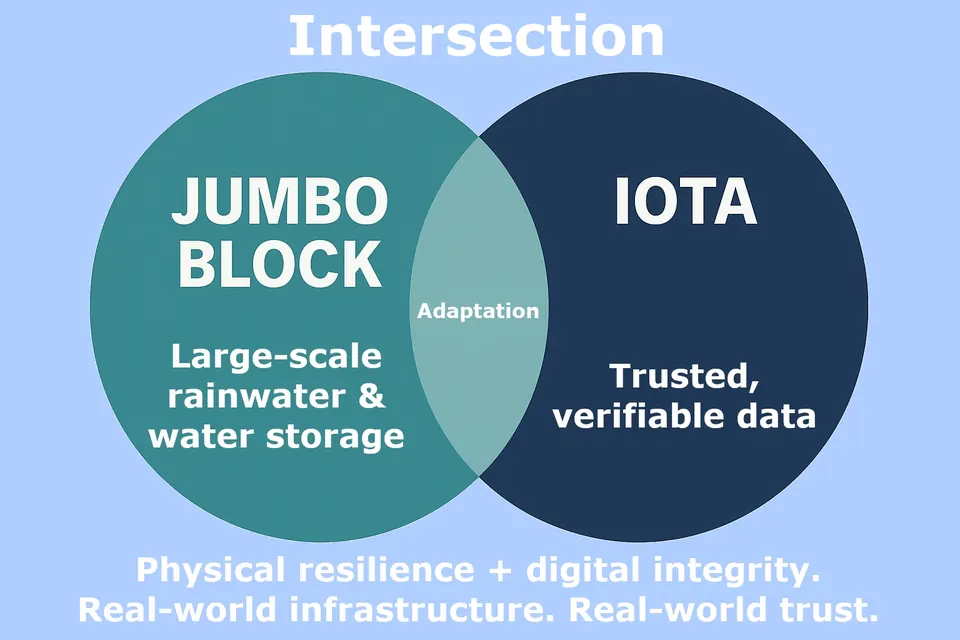
The JUMBO BLOCK® system therefore connects two layers of modern infrastructure:
- physical adaptation of cities to extreme rainfall
- digital transparency about the condition of the installation
This provides not only protection against flooding – but also traceable documentation of events.
Infrastructure that does more than protect
The JUMBO BLOCK® system turns sealed surfaces such as streets or squares into underground water storage. Rainwater is taken in and stored directly beneath the surface before it can be discharged in a controlled way or put to further use.
But modern infrastructure has to do more than just take in water.
It also has to be measurable, traceable and verifiable.
That is why every installation can be complemented by digital monitoring that regularly documents the condition of the infrastructure.
Infrastructure snapshots at fixed intervals
At defined intervals, the system creates a digital infrastructure snapshot.
This snapshot includes, among other things:
- fill levels of individual storage areas
- the overall condition of the installation
- current weather data
- location information
- system states of the controls
Together, this creates continuous documentation of the infrastructure.
You can think of this data trail as a flight recorder for urban water infrastructure.
Why sensor deviations matter too
A particularly interesting effect becomes apparent during exceptional events.
With several independent measuring points within the infrastructure, even a partial failure of sensors can provide important clues about how an event unfolded.
If individual sensors suddenly stop delivering new data or show strongly deviating values, this can indicate situations such as:
- extreme hydraulic loads
- debris inflow or mechanical damage
- exceptional flooding events
- technical faults
- sabotage or external interference
The last known state of a sensor remains part of the documentation. This makes it possible to trace later when and under what circumstances changes occurred in the system.
Especially for critical infrastructure, this form of event documentation can provide valuable insights.
A digital audit chain for infrastructure events
All infrastructure snapshots are stored in a digital audit chain.
Each record is linked to the previous one. This creates a continuous event history in which subsequent changes would be immediately recognisable.
This form of documentation enables, among other things:
- technical analysis of heavy-rain events
- traceable event documentation
- support for insurance and damage claims
- long-term evaluation for infrastructure planning
Significance for critical infrastructure and municipal resilience
Requirements for critical infrastructure are rising significantly across Europe.
In future, municipalities will not only have to implement protective measures but also be able to prove that their systems:
- work robustly
- document events traceably
- and provide a transparent data basis.
The JUMBO BLOCK® system therefore combines physical adaptation with digital traceability.
The result is infrastructure that not only stores water – but also makes events understandable.
Infrastructure for a new reality
Extreme events cannot always be prevented.
But their effects can be better understood when infrastructure not only reacts but also documents.
The combination of underground water storage and digital event logging creates a new generation of urban infrastructure – resilient, traceable and future-proof.
JUMBO BLOCK® – infrastructure that protects.
And shows what really happened.